Amirul
Resident Journalist
Vehicle safety and emissions regulations are pretty tight nowadays. The cars in each segment must comply to certain standards; restricting air released from specific sources at specific timeframes. It leads to things you see in recent years where automakers went turbocharging and/or engine downsizing.
The same goes for safety, when designers want their cars to look attractive in a certain way but are constantly reminded by engineers to comply to certain regulations for both occupants and pedestrian safety.
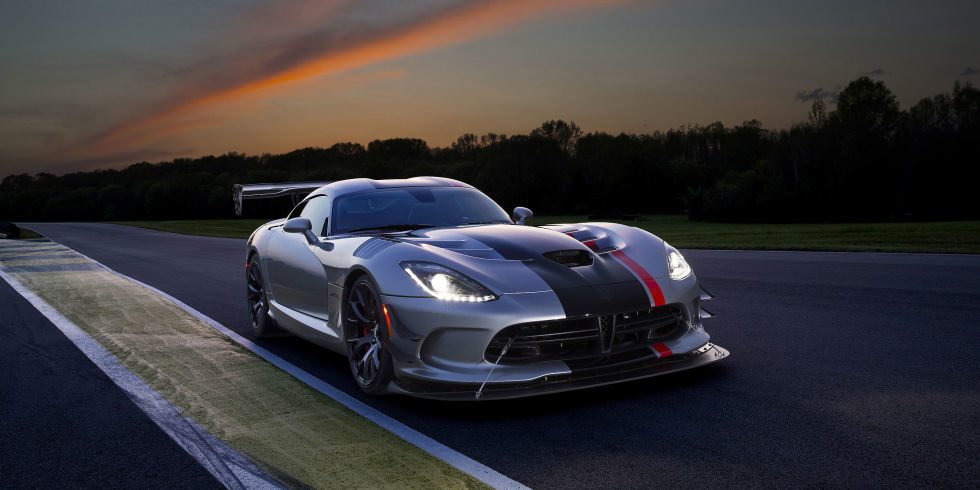
The thing with the Viper ACR is, that the car is asking for its design and engineering department to take a break. Like, “Hey, why don’t we just make what we want to?” But I am not saying that the Viper ACR is not a safe car or does not comply to current regulations. Far from that.
The Dodge Viper ACR with its 8.4-litre V10 produces 645hp and over 800Nm of torque is as wild as it gets. Engine downsizing? Nope. Force induction? Nope. Efficient dual-clutch automatic? Big nope. Active aero? What’s that..
Just like the Aston Martin Vantage GT12 and the Porsche 911 R, that strive to utilise the best of the old skool bits.
Nevertheless, the Viper ACR complies with set regulations, as The Land of The Free (contrary to its name) enforces one of the most stringent regulations on the planet. But Dodge managed to comply using a rather traditional approach.
‘Race car for the road’ is a cliché statement, but that is the case with the Viper ACR. It employs wide, hydroplane-inducing 295 section tyres up front and 335 sections at its rear. The cast-iron block V10 is massive in displacement, but still revs to 6500 rpm. It also has a front splitter, dive planes and a huge rear wing that you can have your lunch on, the Viper ACR generates so much downforce that the top speed is somewhat stuck at ‘just’ 285km/h.
Chris Harris of Top Gear was blown away by how the Viper ACR drives, where initially, he expected the car to handle just like a typical American muscle. He also recommends that if you have the money to spend for a serious track day tool, you should test the Viper ACR first before signing the check for a GT3 RS.
And as usual, even with the immense downforce and super-sticky Kumho rubbers, Chris put the cars sideways like nobody’s business. I mean, he drifted the F40 and the P1 before, so…
To remind you how serious the Viper ACR is, it currently holds the lap record for production cars at the Mazda Raceway, Laguna Seca. It clocked 1:28.65 in a test done by Motor Trend during its Best Driver’s Car award a few years back, with Randy Pobst behind the wheel.
However, for 2016 Motor Trend Best Driver’s Car, the current model Viper ACR was slightly off the pace, clocking 1:31.58. Still the fastest car among the other contenders, though.
The same goes for safety, when designers want their cars to look attractive in a certain way but are constantly reminded by engineers to comply to certain regulations for both occupants and pedestrian safety.
The thing with the Viper ACR is, that the car is asking for its design and engineering department to take a break. Like, “Hey, why don’t we just make what we want to?” But I am not saying that the Viper ACR is not a safe car or does not comply to current regulations. Far from that.
The Dodge Viper ACR with its 8.4-litre V10 produces 645hp and over 800Nm of torque is as wild as it gets. Engine downsizing? Nope. Force induction? Nope. Efficient dual-clutch automatic? Big nope. Active aero? What’s that..
Just like the Aston Martin Vantage GT12 and the Porsche 911 R, that strive to utilise the best of the old skool bits.
Nevertheless, the Viper ACR complies with set regulations, as The Land of The Free (contrary to its name) enforces one of the most stringent regulations on the planet. But Dodge managed to comply using a rather traditional approach.
‘Race car for the road’ is a cliché statement, but that is the case with the Viper ACR. It employs wide, hydroplane-inducing 295 section tyres up front and 335 sections at its rear. The cast-iron block V10 is massive in displacement, but still revs to 6500 rpm. It also has a front splitter, dive planes and a huge rear wing that you can have your lunch on, the Viper ACR generates so much downforce that the top speed is somewhat stuck at ‘just’ 285km/h.
Chris Harris of Top Gear was blown away by how the Viper ACR drives, where initially, he expected the car to handle just like a typical American muscle. He also recommends that if you have the money to spend for a serious track day tool, you should test the Viper ACR first before signing the check for a GT3 RS.
And as usual, even with the immense downforce and super-sticky Kumho rubbers, Chris put the cars sideways like nobody’s business. I mean, he drifted the F40 and the P1 before, so…
To remind you how serious the Viper ACR is, it currently holds the lap record for production cars at the Mazda Raceway, Laguna Seca. It clocked 1:28.65 in a test done by Motor Trend during its Best Driver’s Car award a few years back, with Randy Pobst behind the wheel.
However, for 2016 Motor Trend Best Driver’s Car, the current model Viper ACR was slightly off the pace, clocking 1:31.58. Still the fastest car among the other contenders, though.
Last edited: