Menu
Home
Post Something
Forums
Current Activity
New posts
Search forums
What's new
New posts
Latest activity
News & Features
The Marketplace
Cars for Sale
Engine and Performance
Chassis and Wheels
Exterior and Body
Interior and Cockpit
ICE - In Car Entertainment
Car Shops and Services
Toys and Wares
All Other Stuff
Jobs and Vacancies
Looking For
Members
Log in
Register
What's new
Search
Search
Search titles only
By:
Current Activity
New posts
Search forums
Menu
Log in
Register
Reply to thread
See what others are reading now! Try Forums >
Current Activity
Home
Forums
Car Brands
Car Manufacturers
Honda
H22A vs K2xA??
JavaScript is disabled. For a better experience, please enable JavaScript in your browser before proceeding.
You are using an out of date browser. It may not display this or other websites correctly.
You should upgrade or use an
alternative browser
.
Message
<blockquote data-quote="mrbear" data-source="post: 1220076" data-attributes="member: 19881"><p>Honda Prelude</p><p></p><p>Honda's fifth-generation Prelude may look less menacing than its predecessor; however, it is loaded with potent "weapons," confides a senior Honda engineer. The sleek 2+2 coupe's main markets are Japan, the U.S., and Europe.</p><p></p><p>There is a bewildering variety of engine options for the three markets. The U.S. will basically use one engine, the type-H22A dual overhead camshaft, VTEC (Honda's variable valve timing/lift system), 2157 cm3, inline four-cylinger engine rated for 145 kW (SAE net) at 6600 rpm and 211 N·m at 5250 rpm with a 10.0:1 compression ratio (CR). The same engine mated to the four-speed automatic produces 3.7 kW less.</p><p></p><p>Europe will have the H22A 2.2-L and its 2.0-L version, the latter receiving favorable tax concessions in certain countries. Japan gets four engine choices. The type H22A is available in two stages of tune; the normal version puts out 149 kW (JIS net) at 6800 rpm and 219 N·m of torque at 5500 rpm on a slightly higher 10.6:1 CR. The "S" version of the H22A has power and torque of 164 kW at 7200 rpm and 221 N·m at 6500 rpm, respectively, on a yet higher 11.0:1 CR. The H22A S adopts high performance camshafts with more valve overlap and higher lifts as follows:</p><p></p><p>Normal H22A "S" H22A </p><p>Valve Timing </p><p>Intake opening, (°BTDC) 15 15 </p><p>Intake closing, (°ATDC) 40 45 </p><p>Exhaust opening, (°BBDC) 40 45 </p><p>Exhaust closing, (°ATDC) 15 15 </p><p>Valve lift </p><p>Intake, (mm) 11.5 12.2 </p><p>Exhaust, (mm) 10.5 11.2 </p><p>* Honda's valve timing/lift are measured at 1-mm lift</p><p></p><p>Additionally, the S engine is given the same treatment as the junior Integra "R" 1.8-L engine including polished intake and exhaust ports, smoother-surfaced (by finer casting sand) intake manifold, and freer exhaust system. The S spec engine is Japanese exclusive and combined with a manual five-speed transmission. The VTEC engine's change-over from the low- to high-speed valve timing and lift operation occurs around 5000-5600 rpm.</p><p></p><p>Common with all H22A engines is the open-deck aluminum cylinder block with cast-in iron liners–a change from the previous closed-deck design. The open-deck design is less prone to casting reject, and its productivity is higher. A new, three-layer, two-bead welded head gasket compensates for reduced rigidity of the block. The new piston design for the H22A features a full-floating crankpin which contributes to quieter engine operation by allowing a closer fit between the pin and the piston, thereby reducing any clatter when the engine is cold.</p><p></p><p>The other two engines are versions of the type F22A, with different internal dimensions (85.0 mm bore and 95.0 mm stroke vs. the H22A's 87.0 mm and 90.7 mm, respectively), obtaining the same displacement of 2156 cm3. Power and torque values for the SOHC, 16-valve unit are 101 kW (JIS net) and 192 N·m at 4500 rpm on a 8.8:1 compression ratio, and the dual overhead camshaft version produces 119 kW at 6000 rpm and 201 N·m at 5200 on a 9.2:1 CR. The F22A requires regular unleaded gasoline, whereas the H22A is specified with premium grade fuel.</p><p></p><p>The F22A is now fitted with a cast aluminum oil pan with extensive internal ribbing as is the H22A for structural rigidity and noise suppression. The engine and transmission are tied by a cast-aluminum stiffener.</p><p></p><p>As for emissions standards, the U.S. versions meet Tier 1 regulations, a part of Honda's strategy ranging from the current Tier 1, through TLEV, to LEV requirements in Calfornia. The Japanese models satisfy the current rules. The most stringent emissions standards are those of EC; therefore, the European engines' outputs are lower than those for the two other markets.</p><p></p><p>A five-speed manual transmission is offered across the board. An advanced version of Honda's electronically controlled automatic transmission is available, except for the U.S. SH and Japanese S models. This is a latest generation Honda automatic, incorporating a larger-capacity and faster microprocessor; the three linear solenoid shift-control valves; two clutch-pressure-control solenoid valves; a revised lockup torque converter with a solenoid control valve; a Grade Logic Control system; and Sequential SportShift. Honda calls this transmission "full-direct control" as engagement and disengagement are actuated by individual linear solenoid valves. The whole transmission is 25 mm shorter than the previous version because of the elimination of low-gear-hold and one-way clutches, made possible by the full-direct control.</p><p></p><p>The transmission is tuned for smooth gear shifts in the automatic range which features an Acura RL-like zigzag gate, while crisper changes can be made in the Sequential SportShift manual mode with push-pull movement of the lever in a straight gate marked "+" (upshift) and "-" (downshift).</p><p></p><p>The Japanese S and American SH models are equipped with Honda's ATTS (active torque transfer system), rechristened from the prototype's DYC (direct yaw control–AE Sep. '96) designation. The ATTS is the fruit of the theoretical analysis and pragmatic engineering of the small team led by chassis designer extraordinaire Yasugi Shibahata of Honda Tochigi R&D Center.</p><p></p><p>Shibahata came to Honda ten years ago after a tenure at Nissan where he felt he had accomplished what he had set out to do–researching and designing various chassis systems including the very early HICAS rear-wheel steering–and was seeking a new field. Shibahata wanted to try his hand on a front-engine, rear-wheel-drive car, but that was a "no-no" at Honda, which was travelling en masse on the front-wheel-drive route. So he turned his attention to a next best thing, all-wheel-drive, with which he expected to make a huge leap in vehicle dynamics (Porsche's 959 AWD super car appeared about that time). Not quite, tells Shibahata, a variable front and rear wheel torque split did not reap such a great harvest. Then one day it occured to him; what if driving torque is variably split between the left and right rear wheels.</p><p></p><p>Shibahata and his company fortified this finding with their "b-method," a theory using stabilizing, yaw-moment diagrams to analyze vehicle behavior over a full range of motions, including the nonlinear region and transient stages (SAE 923081, 940870, etc.). And his team built a number of all-wheel-drive prototypes employing the direct yaw control system. These vehicles impressed those who drove them, your Asian editor being one of outsiders allowed to drive a furious Integra coupe powered by an experimental Lysholm-compressor-boosted engine. Trying as hard as he and his team members did, the Honda management did not adopt the system in a production vehicle due to its high cost.</p><p></p><p>Shibahata returned to his old domain, suspension design, briefly. During this sojourn, he designed a new front suspension for high-power front-wheel-drive cars. The "double joint" suspension is adopted in the American SH and Japanese S coupe models in order to take full advantage of the greater steering feel, linearity and tremendous cornering power offered by ATTS. In place of the normal single pivot compliance bushing on the suspension's lower link, the double-pivot suspension has one pivot each for the trailing diagonal link and the lower I-arm. The geometry minimizes torque steer effects, and reduces longitudinal input load by as much as 14% and vertical load by 8%.</p><p></p><p>Once again Shibahata had an idea, and he tried his direct yaw control principle on a front-wheel-drive prototype. Results were quite dramatic; however, he was more cautious in "selling" his idea to the powers that be at Honda R&D. Yoshiski Uchida, large car project leader (LPL) in charge of the fifth generation Prelude, was impressed with the crude prototype which still had a clumsy, two-shaft, torque-transfer system that left about 100 mm of ground clearance. RAD (representative of automobile development) Tomoyuki Sugiyama of the parent Honda Motor Company, himself an accomplished development engineer, was also impressed. So much so, Sugiyama transferred Shibahata and his team which still belonged to the R&D Center's Research segment, to the Development function "to make the ATTS a product reality in this century," specifically to be included in the new Prelude. Shibahata's breakthrough technology was a triple-planetary gear unit within the ATTS. RAD Sugiyama sees a promising future for the ATTS; its adaptation to a rear-wheel-drive, or even a mid-engine, rear-drive super car, like Honda's own NSX, as well as the all-wheel-drive version which Honda has already developed.</p><p></p><p>The Prelude chassis is basically a refinement of that used in its predecessor, except the SH/S's new double-joint front suspension. The Japanese S model's ABS utilizes the ATTS' yaw-rate and lateral-acceleration sensors, and its electronic control unit interacts with the ATTS ECU, providing active braking control. Shibahata explains that it is an active vehicle stability system as employed by Mercedes Benz (Bosch VDC) and Toyota (VSC), except that it does not have a mechanical hydraulic pressure system. As long as the driver keeps pushing the brake pedal the system takes care of optimally modulating the individual brakes for maximum stability.</p><p></p><p>Optionally available in the Japanese Prelude, except the base SOHC and high-performance S models, is an electronically controlled, electrically actuated rear-wheel-steering system. The 4WS (four-wheel-steering) system reduces the turning circle from the normal model's 11 meters (11.4 for the ATTS-equipped S) curb-to-curb to 9.4 meters.</p><p></p><p>The U.S. Prelude is shod with wide P205/50R16 tires on aluminum alloy wheels, which are shared by the Japanese VTEC models. The new Prelude body has gained 55% more rigidity in bending and 24% more in torsion. The car measures 4520 mm long, 1750 mm wide, and 1315 mm tall on a 2585-mm wheelbase. Curb mass ranges between 1220 kg and 1310 kg.</p></blockquote><p></p>
[QUOTE="mrbear, post: 1220076, member: 19881"] Honda Prelude Honda's fifth-generation Prelude may look less menacing than its predecessor; however, it is loaded with potent "weapons," confides a senior Honda engineer. The sleek 2+2 coupe's main markets are Japan, the U.S., and Europe. There is a bewildering variety of engine options for the three markets. The U.S. will basically use one engine, the type-H22A dual overhead camshaft, VTEC (Honda's variable valve timing/lift system), 2157 cm3, inline four-cylinger engine rated for 145 kW (SAE net) at 6600 rpm and 211 N·m at 5250 rpm with a 10.0:1 compression ratio (CR). The same engine mated to the four-speed automatic produces 3.7 kW less. Europe will have the H22A 2.2-L and its 2.0-L version, the latter receiving favorable tax concessions in certain countries. Japan gets four engine choices. The type H22A is available in two stages of tune; the normal version puts out 149 kW (JIS net) at 6800 rpm and 219 N·m of torque at 5500 rpm on a slightly higher 10.6:1 CR. The "S" version of the H22A has power and torque of 164 kW at 7200 rpm and 221 N·m at 6500 rpm, respectively, on a yet higher 11.0:1 CR. The H22A S adopts high performance camshafts with more valve overlap and higher lifts as follows: Normal H22A "S" H22A Valve Timing Intake opening, (°BTDC) 15 15 Intake closing, (°ATDC) 40 45 Exhaust opening, (°BBDC) 40 45 Exhaust closing, (°ATDC) 15 15 Valve lift Intake, (mm) 11.5 12.2 Exhaust, (mm) 10.5 11.2 * Honda's valve timing/lift are measured at 1-mm lift Additionally, the S engine is given the same treatment as the junior Integra "R" 1.8-L engine including polished intake and exhaust ports, smoother-surfaced (by finer casting sand) intake manifold, and freer exhaust system. The S spec engine is Japanese exclusive and combined with a manual five-speed transmission. The VTEC engine's change-over from the low- to high-speed valve timing and lift operation occurs around 5000-5600 rpm. Common with all H22A engines is the open-deck aluminum cylinder block with cast-in iron liners–a change from the previous closed-deck design. The open-deck design is less prone to casting reject, and its productivity is higher. A new, three-layer, two-bead welded head gasket compensates for reduced rigidity of the block. The new piston design for the H22A features a full-floating crankpin which contributes to quieter engine operation by allowing a closer fit between the pin and the piston, thereby reducing any clatter when the engine is cold. The other two engines are versions of the type F22A, with different internal dimensions (85.0 mm bore and 95.0 mm stroke vs. the H22A's 87.0 mm and 90.7 mm, respectively), obtaining the same displacement of 2156 cm3. Power and torque values for the SOHC, 16-valve unit are 101 kW (JIS net) and 192 N·m at 4500 rpm on a 8.8:1 compression ratio, and the dual overhead camshaft version produces 119 kW at 6000 rpm and 201 N·m at 5200 on a 9.2:1 CR. The F22A requires regular unleaded gasoline, whereas the H22A is specified with premium grade fuel. The F22A is now fitted with a cast aluminum oil pan with extensive internal ribbing as is the H22A for structural rigidity and noise suppression. The engine and transmission are tied by a cast-aluminum stiffener. As for emissions standards, the U.S. versions meet Tier 1 regulations, a part of Honda's strategy ranging from the current Tier 1, through TLEV, to LEV requirements in Calfornia. The Japanese models satisfy the current rules. The most stringent emissions standards are those of EC; therefore, the European engines' outputs are lower than those for the two other markets. A five-speed manual transmission is offered across the board. An advanced version of Honda's electronically controlled automatic transmission is available, except for the U.S. SH and Japanese S models. This is a latest generation Honda automatic, incorporating a larger-capacity and faster microprocessor; the three linear solenoid shift-control valves; two clutch-pressure-control solenoid valves; a revised lockup torque converter with a solenoid control valve; a Grade Logic Control system; and Sequential SportShift. Honda calls this transmission "full-direct control" as engagement and disengagement are actuated by individual linear solenoid valves. The whole transmission is 25 mm shorter than the previous version because of the elimination of low-gear-hold and one-way clutches, made possible by the full-direct control. The transmission is tuned for smooth gear shifts in the automatic range which features an Acura RL-like zigzag gate, while crisper changes can be made in the Sequential SportShift manual mode with push-pull movement of the lever in a straight gate marked "+" (upshift) and "-" (downshift). The Japanese S and American SH models are equipped with Honda's ATTS (active torque transfer system), rechristened from the prototype's DYC (direct yaw control–AE Sep. '96) designation. The ATTS is the fruit of the theoretical analysis and pragmatic engineering of the small team led by chassis designer extraordinaire Yasugi Shibahata of Honda Tochigi R&D Center. Shibahata came to Honda ten years ago after a tenure at Nissan where he felt he had accomplished what he had set out to do–researching and designing various chassis systems including the very early HICAS rear-wheel steering–and was seeking a new field. Shibahata wanted to try his hand on a front-engine, rear-wheel-drive car, but that was a "no-no" at Honda, which was travelling en masse on the front-wheel-drive route. So he turned his attention to a next best thing, all-wheel-drive, with which he expected to make a huge leap in vehicle dynamics (Porsche's 959 AWD super car appeared about that time). Not quite, tells Shibahata, a variable front and rear wheel torque split did not reap such a great harvest. Then one day it occured to him; what if driving torque is variably split between the left and right rear wheels. Shibahata and his company fortified this finding with their "b-method," a theory using stabilizing, yaw-moment diagrams to analyze vehicle behavior over a full range of motions, including the nonlinear region and transient stages (SAE 923081, 940870, etc.). And his team built a number of all-wheel-drive prototypes employing the direct yaw control system. These vehicles impressed those who drove them, your Asian editor being one of outsiders allowed to drive a furious Integra coupe powered by an experimental Lysholm-compressor-boosted engine. Trying as hard as he and his team members did, the Honda management did not adopt the system in a production vehicle due to its high cost. Shibahata returned to his old domain, suspension design, briefly. During this sojourn, he designed a new front suspension for high-power front-wheel-drive cars. The "double joint" suspension is adopted in the American SH and Japanese S coupe models in order to take full advantage of the greater steering feel, linearity and tremendous cornering power offered by ATTS. In place of the normal single pivot compliance bushing on the suspension's lower link, the double-pivot suspension has one pivot each for the trailing diagonal link and the lower I-arm. The geometry minimizes torque steer effects, and reduces longitudinal input load by as much as 14% and vertical load by 8%. Once again Shibahata had an idea, and he tried his direct yaw control principle on a front-wheel-drive prototype. Results were quite dramatic; however, he was more cautious in "selling" his idea to the powers that be at Honda R&D. Yoshiski Uchida, large car project leader (LPL) in charge of the fifth generation Prelude, was impressed with the crude prototype which still had a clumsy, two-shaft, torque-transfer system that left about 100 mm of ground clearance. RAD (representative of automobile development) Tomoyuki Sugiyama of the parent Honda Motor Company, himself an accomplished development engineer, was also impressed. So much so, Sugiyama transferred Shibahata and his team which still belonged to the R&D Center's Research segment, to the Development function "to make the ATTS a product reality in this century," specifically to be included in the new Prelude. Shibahata's breakthrough technology was a triple-planetary gear unit within the ATTS. RAD Sugiyama sees a promising future for the ATTS; its adaptation to a rear-wheel-drive, or even a mid-engine, rear-drive super car, like Honda's own NSX, as well as the all-wheel-drive version which Honda has already developed. The Prelude chassis is basically a refinement of that used in its predecessor, except the SH/S's new double-joint front suspension. The Japanese S model's ABS utilizes the ATTS' yaw-rate and lateral-acceleration sensors, and its electronic control unit interacts with the ATTS ECU, providing active braking control. Shibahata explains that it is an active vehicle stability system as employed by Mercedes Benz (Bosch VDC) and Toyota (VSC), except that it does not have a mechanical hydraulic pressure system. As long as the driver keeps pushing the brake pedal the system takes care of optimally modulating the individual brakes for maximum stability. Optionally available in the Japanese Prelude, except the base SOHC and high-performance S models, is an electronically controlled, electrically actuated rear-wheel-steering system. The 4WS (four-wheel-steering) system reduces the turning circle from the normal model's 11 meters (11.4 for the ATTS-equipped S) curb-to-curb to 9.4 meters. The U.S. Prelude is shod with wide P205/50R16 tires on aluminum alloy wheels, which are shared by the Japanese VTEC models. The new Prelude body has gained 55% more rigidity in bending and 24% more in torsion. The car measures 4520 mm long, 1750 mm wide, and 1315 mm tall on a 2585-mm wheelbase. Curb mass ranges between 1220 kg and 1310 kg. [/QUOTE]
Insert quotes…
Verification
Post reply
The Marketplace Latest
Mugen MS-C Full Bucket Seat Civic Type R FL5 FK8
Started by
aycy
Engine and Performance
Boost Logic Boostlogic Oil Cooler Kit R35 GTR GTR35
Started by
aycy
Engine and Performance
Linney IHI 800WHP Turbo Kit R35 GTR35 GTR
Started by
aycy
Engine and Performance
Varis R35 GTR GTR35 Front Bumper
Started by
aycy
Exterior and Body
HKS Spec R Titanium Exhaust with Y pipe R35 GTR GTR35
Started by
aycy
Engine and Performance
2016 BMW 120i LCI M Sport F20 1.6 Auto
Started by
aycy
Cars for sale
GR Yaris H&R Front Rear Anti Roll Bar
Started by
aycy
Chassis and Wheels
BBS RI-A 10J God Spec FK8 FL5 Honda Civic Type R...
Started by
aycy
Chassis and Wheels
Rays Gram Lights 57CR GR Yaris Subaru Impreza Rim...
Started by
aycy
Chassis and Wheels
2019 Toyota FORTUNER 2.4 VRZ 4X4 (A) Diesel
Started by
aycy
Cars for sale
Posts refresh every 5 minutes
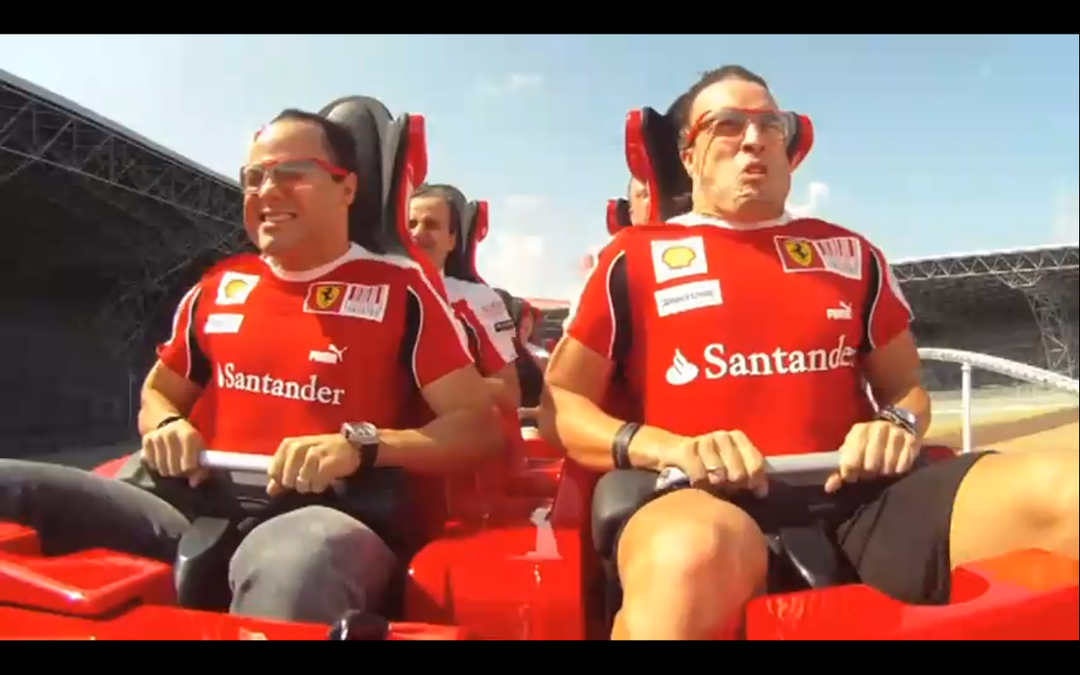
4 Malaysians go on their Fastest 48 Hrs of their lives at Ferrari World Abu Dhabi!
How envious are you at these 4 lucky Malaysians who won an all expense paid trip by Shell Helix to...
Toyota Corolla Altis ties up with Vocaloid : Miku Hatsune
https://www.zerotohundred.com/wp-content/uploads/2011/05/mikucorolla.jpg
Toyota is cashing in on the easiest ways to get Anime fans to buy their cars, by tieing up their Toyota Corolla Altis with the Hatsune Miku...
Power FC + Commander for Altezza
Guys,
Anyone of you have this things on your ride?
How the performance?
http://img99.imageshack.us/img99/6421/pfcdo8.th.jpg
Recent Posts
Looking for 2.5-16 cosworth halfcut for 190E
Started by
Tuanku.J
Euro
Thrills and Spills at Zhuhai: Porsche Carrera Cup Asia Rounds 3 & 4 Recap
Started by
The_Mechanic
News and Features
Proton Records High Demand for S70 with 1 Unit Booked every 4 minutes
Started by
The_Mechanic
News and Features
Toyota Malaysia Enters Regional GT Racing with TGR Racing Malaysia
Started by
The_Mechanic
News and Features
Home Win and Double Podium for Akash Nandy at Sepang Season Opener
Started by
The_Mechanic
News and Features
Search
Online now
Enjoying Zerotohundred?
Log-in
for an ad-less experience
Home
Forums
Car Brands
Car Manufacturers
Honda
H22A vs K2xA??