Menu
Home
Post Something
Forums
Current Activity
New posts
Search forums
What's new
New posts
Latest activity
News & Features
The Marketplace
Cars for Sale
Engine and Performance
Chassis and Wheels
Exterior and Body
Interior and Cockpit
ICE - In Car Entertainment
Car Shops and Services
Toys and Wares
All Other Stuff
Jobs and Vacancies
Looking For
Members
Log in
Register
What's new
Search
Search
Search titles only
By:
Current Activity
New posts
Search forums
Menu
Log in
Register
Reply to thread
See what others are reading now! Try Forums >
Current Activity
Home
Forums
Main Forums
General Talk
Fairlady 300ZX vs Supra
JavaScript is disabled. For a better experience, please enable JavaScript in your browser before proceeding.
You are using an out of date browser. It may not display this or other websites correctly.
You should upgrade or use an
alternative browser
.
Message
<blockquote data-quote="sakuraguy" data-source="post: 1671663" data-attributes="member: 6441"><p><strong>Toyota Supra Mark IV</strong></p><p></p><p>http://img75.imageshack.us/img75/1049/supramk4fk1.jpg</p><p></p><p>With the fourth generation of the Supra, Toyota took a big leap in the direction of a more powerful sports car. The new Supra was completely redesigned, with rounded body styling partly based on the Ferrari F40 and featured two new engines: naturally aspirated 2JZ-GE 220 hp (164 kW) and 210 ft·lbf (285 N·m) of torque and a twin turbocharged 2JZ-GTE making 320 hp (239 kW), 315 ft·lbf (427 N·m) of torque. The turbocharged variant could achieve 0–60 mph in 4.6 seconds and 1/4 mile (402 m) in 13.1 seconds at 109 mph [2]. The engine is capable of producing around 450-500 with the stock twin turbos and mild bolt-on upgrades such as a boost controller and high-flow exhaust. In Japan the cars are limited to 180km/h and in the US the cars are governed to 250kmh in its final drive, but the Supra is capable of considerably higher speed even in the stock configuration.</p><p></p><p>The MKIV Supra's twin turbos operated in sequential mode instead of the more common parallel mode. The sequential setup featured a pair of small, equally sized turbos, with ceramic blades for the domestic Japanese market and steel blades for export (USA, Europe) markets. At first, all of the exhaust is routed to the first turbine for reduced lag. This resulted in boost and enhanced torque as early as 1800 rpm. Approaching 4000 rpm, the exhaust is routed to the second turbine for a "pre-boost" mode, although none of the compressor output is used by the engine at this point. Approaching 4500 rpm, the second turbo's output is added to the intake air, and both turbos operate in parallel. Most cars which are advertised as "twin turbo" operate by having the two equally sized turbos constantly running in parallel; the turbos spool up at the same time. The sequential mode provides greater low-end response at the expense of increased complexity and cost.</p><p></p><p>For this generation, the Supra received a new 6-speed Getrag transmission on the Turbo models while the normally aspirated models made do with a 5-speed manual. Both models were offered with a 4-speed automatic with a manumatic mode. However, the turbo model used 4-piston brake calipers on the front and 2-piston calipers for the rear. The base model used 2-piston calipers for the front and a single piston caliper for the rear. The turbo models were fitted with 235/45/17 tires on the front and 255/40/17 tires for the rear. The base model used 225/50/16 for the front and 245/50/16 for the rears. All vehicles were equipped with 5-spoke aluminium alloy wheels and a "donut" spare tire on a steel wheel.</p><p></p><p>Toyota took measures to reduce the weight of the current model compared to the previous model. The Supra featured hollow carpet fibers. Aluminium was used for the hood, targa top (if so equipped), front crossmember, oil pan, and upper A-arms. Other measures included dished out head bolts, magnesium steering wheel, plastic gas cover, gas injected rear spoiler, and a large single exhaust tip. Despite having more features such as dual airbags, traction control, larger brakes, larger wheels, and larger tires, the car was at least a 100 lbs lighter than its predecessor.</p><p></p><p>For the 1996 model year, the turbo model was only available with the automatic transmission due to OBD2 certification requirements. The targa roof was made standard on all turbo models. For 1997, the manual transmission is back for the optional engine along with a redesign of the tail lights, front fascia, chromed wheels, and other minor changes such as the radio and steering wheel designs. All 1997 models included badges that said, "Limited Edition 15th Anniversary." For 1998, the radio and steering wheel were redesigned once again. The naturally aspirated engine was enhanced with VVTI which raised the output by 5 hp and 10 ft·lbf of torque. The turbo model was not available in California, New York, and Massachusetts due to increased emission regulations.</p><p></p><p>MKIV Supras have been modified (larger turbos running 30+ psi (206 kPa) of boost and other, undisclosed tweaks) to produce over 1453bhp (1084 kW), as measured at the tires, and cover the 1/4 mile (402 m) in 7.9 seconds. The stock 2JZ-GTE stock engine components are astonishingly rugged, capable of withstanding power outputs of over 1000 bhp (~850rwhp dynojet / ~730rwhp dyno dynamics) without having to update any internal components, putting its capabilities in this regard, somewhat above Nissans legendary RB26 series engine. The stock MKIV Supra chassis has also proven a very effective platform for roadracing, with (for example) several top 20 and top 10 One Lap Of America finishes in the SSGT1 class. The major deficiencies with this platform for road racing include heat management and weight due to the 2JZ iron block. The Supra is one of the heaviest 2-door Japanese sports cars, however still slightly lighter than the Nissan R33 and R34 Skyline GTRs to which the Supra is traditionally a rival in its home country.</p><p></p><p>The MKIV has become one of the most popular import platforms for modification. This trend has largely been driven by the strength of the stock parts. Untouched motors have been shown to withstand power levels in excess of 3 times what the stock motor is rated at. For less than USD$1000 the owner can increase the power output from 320 crank horsepower (stock) to around 500 crank horsepower. The car has also been hyped and glamourised in several major motion pictures, to a widely mixed reception depending mostly on the age of audience. In the drag racing circuit, Supras and other 2JZ-powered cars have been running very competitively against domestics with two or three times the displacement. The 2JZ has been recognized as one of the most capable import engines, and the engine design has altered very little since the 2JZ was released in 1993. The 2JZ in the import world can be compared to the LS1 350 cubic inch domestic powerplant (used in Corvettes, Firebirds, Camaros...), both with a great deal of clout and showing excellent performance, despite the same general design for almost two decades of each.</p><p></p><p>In 1998, Toyota ceased to import the cars to the U.S. from Japan, although the car was last sold in Canada in 1995. They stopped production of the car altogether in 2002 due to new emission standards coming into effect in 2003.</p></blockquote><p></p>
[QUOTE="sakuraguy, post: 1671663, member: 6441"] [B]Toyota Supra Mark IV[/B] http://img75.imageshack.us/img75/1049/supramk4fk1.jpg With the fourth generation of the Supra, Toyota took a big leap in the direction of a more powerful sports car. The new Supra was completely redesigned, with rounded body styling partly based on the Ferrari F40 and featured two new engines: naturally aspirated 2JZ-GE 220 hp (164 kW) and 210 ft·lbf (285 N·m) of torque and a twin turbocharged 2JZ-GTE making 320 hp (239 kW), 315 ft·lbf (427 N·m) of torque. The turbocharged variant could achieve 0–60 mph in 4.6 seconds and 1/4 mile (402 m) in 13.1 seconds at 109 mph [2]. The engine is capable of producing around 450-500 with the stock twin turbos and mild bolt-on upgrades such as a boost controller and high-flow exhaust. In Japan the cars are limited to 180km/h and in the US the cars are governed to 250kmh in its final drive, but the Supra is capable of considerably higher speed even in the stock configuration. The MKIV Supra's twin turbos operated in sequential mode instead of the more common parallel mode. The sequential setup featured a pair of small, equally sized turbos, with ceramic blades for the domestic Japanese market and steel blades for export (USA, Europe) markets. At first, all of the exhaust is routed to the first turbine for reduced lag. This resulted in boost and enhanced torque as early as 1800 rpm. Approaching 4000 rpm, the exhaust is routed to the second turbine for a "pre-boost" mode, although none of the compressor output is used by the engine at this point. Approaching 4500 rpm, the second turbo's output is added to the intake air, and both turbos operate in parallel. Most cars which are advertised as "twin turbo" operate by having the two equally sized turbos constantly running in parallel; the turbos spool up at the same time. The sequential mode provides greater low-end response at the expense of increased complexity and cost. For this generation, the Supra received a new 6-speed Getrag transmission on the Turbo models while the normally aspirated models made do with a 5-speed manual. Both models were offered with a 4-speed automatic with a manumatic mode. However, the turbo model used 4-piston brake calipers on the front and 2-piston calipers for the rear. The base model used 2-piston calipers for the front and a single piston caliper for the rear. The turbo models were fitted with 235/45/17 tires on the front and 255/40/17 tires for the rear. The base model used 225/50/16 for the front and 245/50/16 for the rears. All vehicles were equipped with 5-spoke aluminium alloy wheels and a "donut" spare tire on a steel wheel. Toyota took measures to reduce the weight of the current model compared to the previous model. The Supra featured hollow carpet fibers. Aluminium was used for the hood, targa top (if so equipped), front crossmember, oil pan, and upper A-arms. Other measures included dished out head bolts, magnesium steering wheel, plastic gas cover, gas injected rear spoiler, and a large single exhaust tip. Despite having more features such as dual airbags, traction control, larger brakes, larger wheels, and larger tires, the car was at least a 100 lbs lighter than its predecessor. For the 1996 model year, the turbo model was only available with the automatic transmission due to OBD2 certification requirements. The targa roof was made standard on all turbo models. For 1997, the manual transmission is back for the optional engine along with a redesign of the tail lights, front fascia, chromed wheels, and other minor changes such as the radio and steering wheel designs. All 1997 models included badges that said, "Limited Edition 15th Anniversary." For 1998, the radio and steering wheel were redesigned once again. The naturally aspirated engine was enhanced with VVTI which raised the output by 5 hp and 10 ft·lbf of torque. The turbo model was not available in California, New York, and Massachusetts due to increased emission regulations. MKIV Supras have been modified (larger turbos running 30+ psi (206 kPa) of boost and other, undisclosed tweaks) to produce over 1453bhp (1084 kW), as measured at the tires, and cover the 1/4 mile (402 m) in 7.9 seconds. The stock 2JZ-GTE stock engine components are astonishingly rugged, capable of withstanding power outputs of over 1000 bhp (~850rwhp dynojet / ~730rwhp dyno dynamics) without having to update any internal components, putting its capabilities in this regard, somewhat above Nissans legendary RB26 series engine. The stock MKIV Supra chassis has also proven a very effective platform for roadracing, with (for example) several top 20 and top 10 One Lap Of America finishes in the SSGT1 class. The major deficiencies with this platform for road racing include heat management and weight due to the 2JZ iron block. The Supra is one of the heaviest 2-door Japanese sports cars, however still slightly lighter than the Nissan R33 and R34 Skyline GTRs to which the Supra is traditionally a rival in its home country. The MKIV has become one of the most popular import platforms for modification. This trend has largely been driven by the strength of the stock parts. Untouched motors have been shown to withstand power levels in excess of 3 times what the stock motor is rated at. For less than USD$1000 the owner can increase the power output from 320 crank horsepower (stock) to around 500 crank horsepower. The car has also been hyped and glamourised in several major motion pictures, to a widely mixed reception depending mostly on the age of audience. In the drag racing circuit, Supras and other 2JZ-powered cars have been running very competitively against domestics with two or three times the displacement. The 2JZ has been recognized as one of the most capable import engines, and the engine design has altered very little since the 2JZ was released in 1993. The 2JZ in the import world can be compared to the LS1 350 cubic inch domestic powerplant (used in Corvettes, Firebirds, Camaros...), both with a great deal of clout and showing excellent performance, despite the same general design for almost two decades of each. In 1998, Toyota ceased to import the cars to the U.S. from Japan, although the car was last sold in Canada in 1995. They stopped production of the car altogether in 2002 due to new emission standards coming into effect in 2003. [/QUOTE]
Insert quotes…
Verification
Post reply
The Marketplace Latest
Mugen MS-C Full Bucket Seat Civic Type R FL5 FK8
Started by
aycy
Engine and Performance
Boost Logic Boostlogic Oil Cooler Kit R35 GTR GTR35
Started by
aycy
Engine and Performance
Linney IHI 800WHP Turbo Kit R35 GTR35 GTR
Started by
aycy
Engine and Performance
Varis R35 GTR GTR35 Front Bumper
Started by
aycy
Exterior and Body
HKS Spec R Titanium Exhaust with Y pipe R35 GTR GTR35
Started by
aycy
Engine and Performance
2016 BMW 120i LCI M Sport F20 1.6 Auto
Started by
aycy
Cars for sale
GR Yaris H&R Front Rear Anti Roll Bar
Started by
aycy
Chassis and Wheels
BBS RI-A 10J God Spec FK8 FL5 Honda Civic Type R...
Started by
aycy
Chassis and Wheels
Rays Gram Lights 57CR GR Yaris Subaru Impreza Rim...
Started by
aycy
Chassis and Wheels
2019 Toyota FORTUNER 2.4 VRZ 4X4 (A) Diesel
Started by
aycy
Cars for sale
Posts refresh every 5 minutes
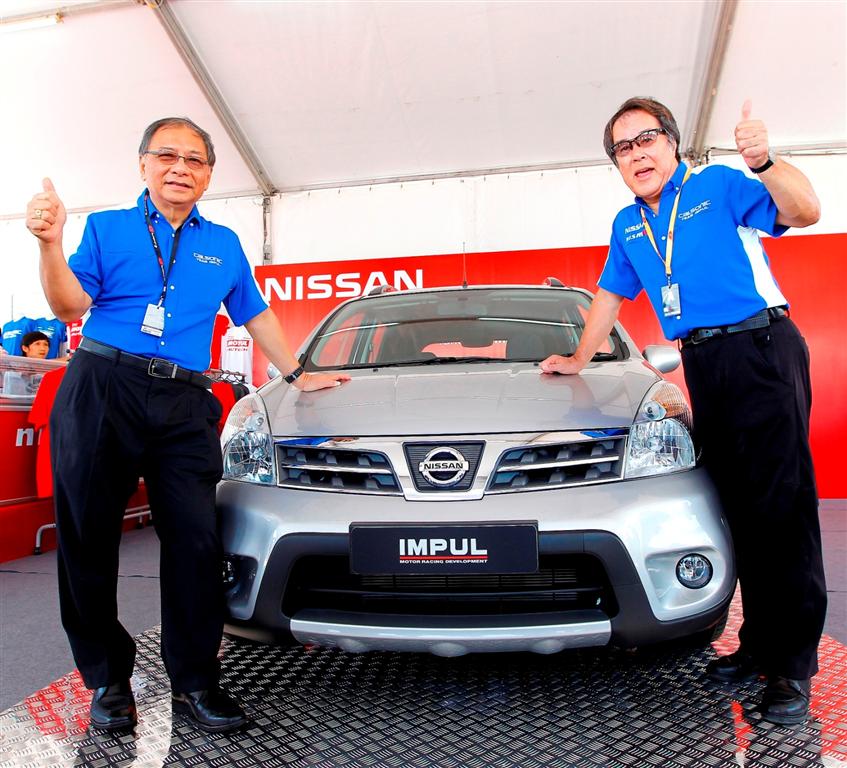
ETCM Offers IMPUL-Tuned Nissan Livina X-Gear and Nissan Sylpy
Edaran Tan Chong Motor (ETCM) has loosed two new...
Hello. My JDM R35 in UK
Hi guys,
you have a great forum here. can't believe how big it is
My names Ben Linney from UK but im 1/4 Malaysian :-P
here is my JDM R35
Photoshoot straight out the show room
View attachment 667886
...
Weird sound on my car T_T
any altezza owner have the sound like krok krok krok ??
when i stop the car..then i tekan minyak lagi..got a sound "krokrkorkorkrokrok" dunno comes out from where..it seems like from console box..but i guess not...
Recent Posts
Looking for 2.5-16 cosworth halfcut for 190E
Started by
Tuanku.J
Euro
Thrills and Spills at Zhuhai: Porsche Carrera Cup Asia Rounds 3 & 4 Recap
Started by
The_Mechanic
News and Features
Proton Records High Demand for S70 with 1 Unit Booked every 4 minutes
Started by
The_Mechanic
News and Features
Toyota Malaysia Enters Regional GT Racing with TGR Racing Malaysia
Started by
The_Mechanic
News and Features
Home Win and Double Podium for Akash Nandy at Sepang Season Opener
Started by
The_Mechanic
News and Features
Search
Online now
Enjoying Zerotohundred?
Log-in
for an ad-less experience
Home
Forums
Main Forums
General Talk
Fairlady 300ZX vs Supra