Menu
Home
Post Something
Forums
Current Activity
New posts
Search forums
What's new
New posts
Latest activity
News & Features
The Marketplace
Cars for Sale
Engine and Performance
Chassis and Wheels
Exterior and Body
Interior and Cockpit
ICE - In Car Entertainment
Car Shops and Services
Toys and Wares
All Other Stuff
Jobs and Vacancies
Looking For
Members
Log in
Register
What's new
Search
Search
Search titles only
By:
Current Activity
New posts
Search forums
Menu
Log in
Register
Reply to thread
See what others are reading now! Try Forums >
Current Activity
Home
Forums
Main Forums
General Talk
Turbocharger
JavaScript is disabled. For a better experience, please enable JavaScript in your browser before proceeding.
You are using an out of date browser. It may not display this or other websites correctly.
You should upgrade or use an
alternative browser
.
Message
<blockquote data-quote="sakuraguy" data-source="post: 989138" data-attributes="member: 6441"><p>SUPERCHARGER</p><p></p><p>A supercharger (also known as a blower, a positive displacement pump or a centrifugal pumper) is a gas compressor used to pump air into the cylinders of an internal combustion engine. The additional mass of oxygen that is forced into the cylinders allows the engine to burn more fuel, which improves the volumetric efficiency of the engine and makes it more powerful. A supercharger is powered mechanically by belt- or chain-drive from the engine's crankshaft. It is similar in purpose to the closely related turbocharger, but a turbocharger is powered by the flow of the engine's exhaust gases driving a turbine. Superchargers may absorb as much as a third of the total crankshaft power of the engine, and in many applications are less efficient than turbochargers. In applications where a massive amount of power is more important than any other consideration, such as top-fuel dragsters and vehicles used in tractor pulling competitions, superchargers are extremely common.</p><p></p><p>In cars, the device is used to increase the "effective displacement" and volumetric efficiency of an engine, and is often referred to as a blower. By pushing the air into the cylinders, it is as if the engine had larger valves and cylinders, resulting in a "larger" engine that weighs less. Turbochargers are more commonly used in this role because they use otherwise "wasted" heat energy instead of using up power from the crank, but the supercharger reacts more quickly to power application and thus outaccelerates a car with the same amount of boost being provided by a turbo.</p><p></p><p>In 1900 Gottlieb Daimler (of Daimler-Benz / Daimler-Chrysler fame) became the first person to patent a forced-induction system for internal combustion engines. His first superchargers were based on a twin-rotor air-pump design first patented by American Francis Roots in 1860. This design is the basis for the modern Roots type supercharger.</p><p></p><p>It wasn't long after its invention before the supercharger was applied to custom racing cars, with the first supercharged production vehicles being built by Mercedes and Bentley in the 1920s. Since then superchargers (as well as turbochargers) have been widely applied to racing and production cars, although their complexity and cost has largely relegated the supercharger to the world of pricey performance cars.</p><p></p><p>Boosting has made something of a comeback in recent years due largely to the increased quality of the alloys and machining of modern engines. Boosting used to be an effective way to dramatically shorten an engine's life but, today, there is considerable overdesign possible with modern materials and boosting is no longer a serious reliability concern. For this reason boosting is commonly used in smaller cars, where the added weight of the supercharger is smaller than the weight of a larger engine delivering the same amount of power. This also results in better gas mileage, as mileage is often a function of the overall weight of the car and that is based, to some degree, on the weight of the engine.</p><p></p><p>There are three commonly used types used in today's automotive world: Roots type supercharger (of which the Eaton is a variant), twin-screw type supercharger, and Centrifugal type supercharger.</p><p></p><p>For example, GM cars use the Eaton-type supercharger in the Chevrolet Monte Carlo SS, Chevrolet Impala SS, Pontiac Bonneville SSEi, Pontiac Grand Prix GTP, and Buick Regal GS. These cars use the venerable GM Series II, or newer Series III 3.8 L V6.</p></blockquote><p></p>
[QUOTE="sakuraguy, post: 989138, member: 6441"] SUPERCHARGER A supercharger (also known as a blower, a positive displacement pump or a centrifugal pumper) is a gas compressor used to pump air into the cylinders of an internal combustion engine. The additional mass of oxygen that is forced into the cylinders allows the engine to burn more fuel, which improves the volumetric efficiency of the engine and makes it more powerful. A supercharger is powered mechanically by belt- or chain-drive from the engine's crankshaft. It is similar in purpose to the closely related turbocharger, but a turbocharger is powered by the flow of the engine's exhaust gases driving a turbine. Superchargers may absorb as much as a third of the total crankshaft power of the engine, and in many applications are less efficient than turbochargers. In applications where a massive amount of power is more important than any other consideration, such as top-fuel dragsters and vehicles used in tractor pulling competitions, superchargers are extremely common. In cars, the device is used to increase the "effective displacement" and volumetric efficiency of an engine, and is often referred to as a blower. By pushing the air into the cylinders, it is as if the engine had larger valves and cylinders, resulting in a "larger" engine that weighs less. Turbochargers are more commonly used in this role because they use otherwise "wasted" heat energy instead of using up power from the crank, but the supercharger reacts more quickly to power application and thus outaccelerates a car with the same amount of boost being provided by a turbo. In 1900 Gottlieb Daimler (of Daimler-Benz / Daimler-Chrysler fame) became the first person to patent a forced-induction system for internal combustion engines. His first superchargers were based on a twin-rotor air-pump design first patented by American Francis Roots in 1860. This design is the basis for the modern Roots type supercharger. It wasn't long after its invention before the supercharger was applied to custom racing cars, with the first supercharged production vehicles being built by Mercedes and Bentley in the 1920s. Since then superchargers (as well as turbochargers) have been widely applied to racing and production cars, although their complexity and cost has largely relegated the supercharger to the world of pricey performance cars. Boosting has made something of a comeback in recent years due largely to the increased quality of the alloys and machining of modern engines. Boosting used to be an effective way to dramatically shorten an engine's life but, today, there is considerable overdesign possible with modern materials and boosting is no longer a serious reliability concern. For this reason boosting is commonly used in smaller cars, where the added weight of the supercharger is smaller than the weight of a larger engine delivering the same amount of power. This also results in better gas mileage, as mileage is often a function of the overall weight of the car and that is based, to some degree, on the weight of the engine. There are three commonly used types used in today's automotive world: Roots type supercharger (of which the Eaton is a variant), twin-screw type supercharger, and Centrifugal type supercharger. For example, GM cars use the Eaton-type supercharger in the Chevrolet Monte Carlo SS, Chevrolet Impala SS, Pontiac Bonneville SSEi, Pontiac Grand Prix GTP, and Buick Regal GS. These cars use the venerable GM Series II, or newer Series III 3.8 L V6. [/QUOTE]
Insert quotes…
Verification
Post reply
The Marketplace Latest
Evasive EVS Tuning Carbon Body Kit Honda Civic Type...
Started by
aycy
Exterior and Body
Mugen MS-C Full Bucket Seat Civic Type R FL5 FK8
Started by
aycy
Engine and Performance
Boost Logic Boostlogic Oil Cooler Kit R35 GTR GTR35
Started by
aycy
Engine and Performance
Linney IHI 800WHP Turbo Kit R35 GTR35 GTR
Started by
aycy
Engine and Performance
Varis R35 GTR GTR35 Front Bumper
Started by
aycy
Exterior and Body
HKS Spec R Titanium Exhaust with Y pipe R35 GTR GTR35
Started by
aycy
Engine and Performance
2016 BMW 120i LCI M Sport F20 1.6 Auto
Started by
aycy
Cars for sale
GR Yaris H&R Front Rear Anti Roll Bar
Started by
aycy
Chassis and Wheels
BBS RI-A 10J God Spec FK8 FL5 Honda Civic Type R...
Started by
aycy
Chassis and Wheels
Rays Gram Lights 57CR GR Yaris Subaru Impreza Rim...
Started by
aycy
Chassis and Wheels
Posts refresh every 5 minutes
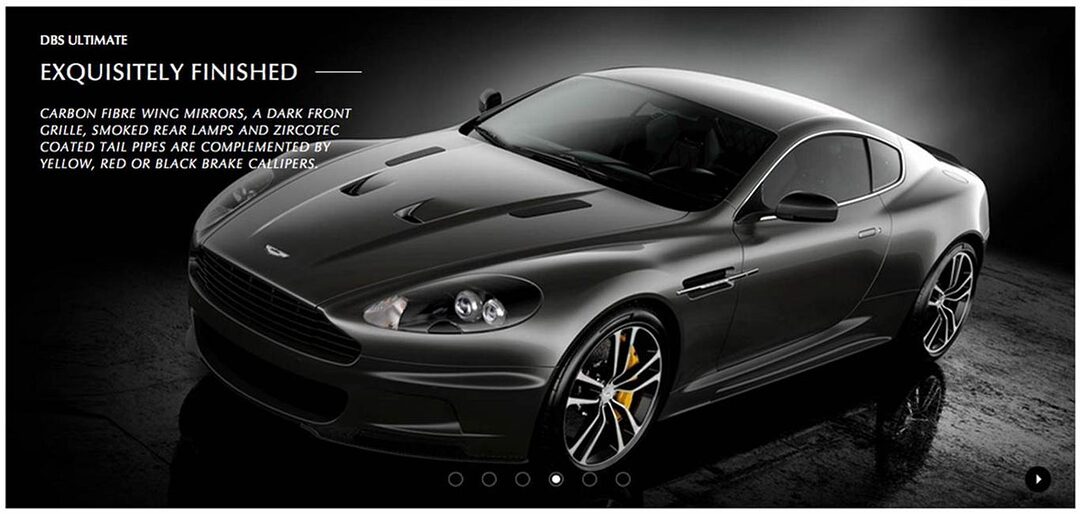
Aston Martin DBS Ultimate Breaks Online Cover
Aston Martin released their DBS Ultimate for those who seek something out of the ordinary catalogue...
We'll finally see the Nissan GTR on 24th of October 2007!
Tokyo, Japan, (September 26, 2007) – Nissan today started the pre-launch activities in support of the all-new GT-R, the high...
Absorbers for Lancer MX?
Can someone tell me does the absorbers from wira or waja fit into Lancer MX without any mod?
Recent Posts
Looking for 2.5-16 cosworth halfcut for 190E
Started by
Tuanku.J
Euro
Thrills and Spills at Zhuhai: Porsche Carrera Cup Asia Rounds 3 & 4 Recap
Started by
The_Mechanic
News and Features
Proton Records High Demand for S70 with 1 Unit Booked every 4 minutes
Started by
The_Mechanic
News and Features
Toyota Malaysia Enters Regional GT Racing with TGR Racing Malaysia
Started by
The_Mechanic
News and Features
Home Win and Double Podium for Akash Nandy at Sepang Season Opener
Started by
The_Mechanic
News and Features
Search
Online now
Enjoying Zerotohundred?
Log-in
for an ad-less experience
Home
Forums
Main Forums
General Talk
Turbocharger