Menu
Home
Post Something
Forums
Current Activity
New posts
Search forums
What's new
New posts
Latest activity
News & Features
The Marketplace
Cars for Sale
Engine and Performance
Chassis and Wheels
Exterior and Body
Interior and Cockpit
ICE - In Car Entertainment
Car Shops and Services
Toys and Wares
All Other Stuff
Jobs and Vacancies
Looking For
Members
Log in
Register
What's new
Search
Search
Search titles only
By:
Current Activity
New posts
Search forums
Menu
Log in
Register
Reply to thread
See what others are reading now! Try Forums >
Current Activity
Home
Forums
Main Forums
Car Talk
Car Modification
Suspension - INFORMATIONAL
JavaScript is disabled. For a better experience, please enable JavaScript in your browser before proceeding.
You are using an out of date browser. It may not display this or other websites correctly.
You should upgrade or use an
alternative browser
.
Message
<blockquote data-quote="sakuraguy" data-source="post: 1656455" data-attributes="member: 6441"><p><strong>Double Wishbone Suspension</strong></p><p></p><p>In automobiles, a double wishbone suspension is an independent suspension design using two parallel wishbone-shaped arms to locate the wheel. Each wishbone (or arm) has two mounting positions to the chassis and one joint at the knuckle. The shock absorber and coil spring mount to the wishbones to control vertical movement. Double-wishbone designs allow the engineer to carefully control the motion of the wheel throughout suspension travel, controlling such parameters as camber angle, caster angle, toe pattern, roll center height, scrub radius, scuff and many more.</p><p></p><p></p><p>The double wishbone suspension is also often referred to as double 'A' arm or short long arm (SLA) suspension. It is commonly used in sports cars, luxury cars and light trucks.</p><p></p><p>A very similar arrangement, often using a single arm, is the A-arm suspension.</p><p></p><p>The suspension consists of a pair of upper and lower lateral arms, roughly horizontal and of similar length. The upper arm is usually slightly shorter to induce more negative camber on the outside wheel as the vehicle body rolls in a turn. Between the arms there is a knuckle with a spindle or hub which carries the wheel bearing and wheel. Knuckles with an integral spindle usually do not allow the wheel to be driven. A bolt on hub design is commonly used if the wheel is to be driven.</p><p></p><p>In order to resist fore-aft loads such as acceleration and braking, the arms need two bushings or ball joints at the body.</p><p></p><p>At the knuckle end, single ball joints can be used, in which case the steering loads have to be taken via a steering arm, and the wishbones look A- or L-shaped. An L-shaped arm is generally preferred on passenger vehicles because it allows a better compromise of handling and comfort to be tuned in. The bushing in line with the wheel can be kept relatively stiff to effectively handle cornering loads while the offline joint can be softer to allow the wheel to recess under fore aft impact loads. For a rear suspension a pair of joints can be used at both ends of the arm, making them more H-shaped in plan view.</p><p></p><p>In front view the suspension is a 4-bar link, and it is easy to work out the camber gain (see camber angle) etc., for a given set of bush locations.</p><p></p><p>The various bushes do not have to be on horizontal axes, parallel to the vehicle centre line. If they are set at an angle then antidive and antisquat can be dialled in.</p><p></p><p>The advantage of a double wishbone suspension is that it is fairly easy to work out the effect of moving each joint, so you can tune the kinematics of the suspension easily and optimize wheel motion. It is also easy to work out the loads that different parts will be subjected to which allows more optimized lightweight parts to be designed.</p><p></p><p>The disadvantage is that it is slightly more complex than other systems like a MacPherson strut.</p><p></p><p>SLAs are very common on front suspensions for larger cars, Pickups and SUV's and double wishbones are very common at both ends of racing cars.</p><p></p><p>Prior to the dominance of front wheel drive in the 1980s, many everyday cars used double-wishbone front suspension systems, or a variation on it. Since that time, the MacPherson strut has become almost ubiquitous, as it is simpler and cheaper to manufacture. Double-wishbones are usually considered to have superior dynamic characteristics, load handling capability and are still found on higher performance vehicles.</p></blockquote><p></p>
[QUOTE="sakuraguy, post: 1656455, member: 6441"] [B]Double Wishbone Suspension[/B] In automobiles, a double wishbone suspension is an independent suspension design using two parallel wishbone-shaped arms to locate the wheel. Each wishbone (or arm) has two mounting positions to the chassis and one joint at the knuckle. The shock absorber and coil spring mount to the wishbones to control vertical movement. Double-wishbone designs allow the engineer to carefully control the motion of the wheel throughout suspension travel, controlling such parameters as camber angle, caster angle, toe pattern, roll center height, scrub radius, scuff and many more. The double wishbone suspension is also often referred to as double 'A' arm or short long arm (SLA) suspension. It is commonly used in sports cars, luxury cars and light trucks. A very similar arrangement, often using a single arm, is the A-arm suspension. The suspension consists of a pair of upper and lower lateral arms, roughly horizontal and of similar length. The upper arm is usually slightly shorter to induce more negative camber on the outside wheel as the vehicle body rolls in a turn. Between the arms there is a knuckle with a spindle or hub which carries the wheel bearing and wheel. Knuckles with an integral spindle usually do not allow the wheel to be driven. A bolt on hub design is commonly used if the wheel is to be driven. In order to resist fore-aft loads such as acceleration and braking, the arms need two bushings or ball joints at the body. At the knuckle end, single ball joints can be used, in which case the steering loads have to be taken via a steering arm, and the wishbones look A- or L-shaped. An L-shaped arm is generally preferred on passenger vehicles because it allows a better compromise of handling and comfort to be tuned in. The bushing in line with the wheel can be kept relatively stiff to effectively handle cornering loads while the offline joint can be softer to allow the wheel to recess under fore aft impact loads. For a rear suspension a pair of joints can be used at both ends of the arm, making them more H-shaped in plan view. In front view the suspension is a 4-bar link, and it is easy to work out the camber gain (see camber angle) etc., for a given set of bush locations. The various bushes do not have to be on horizontal axes, parallel to the vehicle centre line. If they are set at an angle then antidive and antisquat can be dialled in. The advantage of a double wishbone suspension is that it is fairly easy to work out the effect of moving each joint, so you can tune the kinematics of the suspension easily and optimize wheel motion. It is also easy to work out the loads that different parts will be subjected to which allows more optimized lightweight parts to be designed. The disadvantage is that it is slightly more complex than other systems like a MacPherson strut. SLAs are very common on front suspensions for larger cars, Pickups and SUV's and double wishbones are very common at both ends of racing cars. Prior to the dominance of front wheel drive in the 1980s, many everyday cars used double-wishbone front suspension systems, or a variation on it. Since that time, the MacPherson strut has become almost ubiquitous, as it is simpler and cheaper to manufacture. Double-wishbones are usually considered to have superior dynamic characteristics, load handling capability and are still found on higher performance vehicles. [/QUOTE]
Insert quotes…
Verification
Post reply
The Marketplace Latest
Mugen MS-C Full Bucket Seat Civic Type R FL5 FK8
Started by
aycy
Engine and Performance
Boost Logic Boostlogic Oil Cooler Kit R35 GTR GTR35
Started by
aycy
Engine and Performance
Linney IHI 800WHP Turbo Kit R35 GTR35 GTR
Started by
aycy
Engine and Performance
Varis R35 GTR GTR35 Front Bumper
Started by
aycy
Exterior and Body
HKS Spec R Titanium Exhaust with Y pipe R35 GTR GTR35
Started by
aycy
Engine and Performance
2016 BMW 120i LCI M Sport F20 1.6 Auto
Started by
aycy
Cars for sale
GR Yaris H&R Front Rear Anti Roll Bar
Started by
aycy
Chassis and Wheels
BBS RI-A 10J God Spec FK8 FL5 Honda Civic Type R...
Started by
aycy
Chassis and Wheels
Rays Gram Lights 57CR GR Yaris Subaru Impreza Rim...
Started by
aycy
Chassis and Wheels
2019 Toyota FORTUNER 2.4 VRZ 4X4 (A) Diesel
Started by
aycy
Cars for sale
Posts refresh every 5 minutes
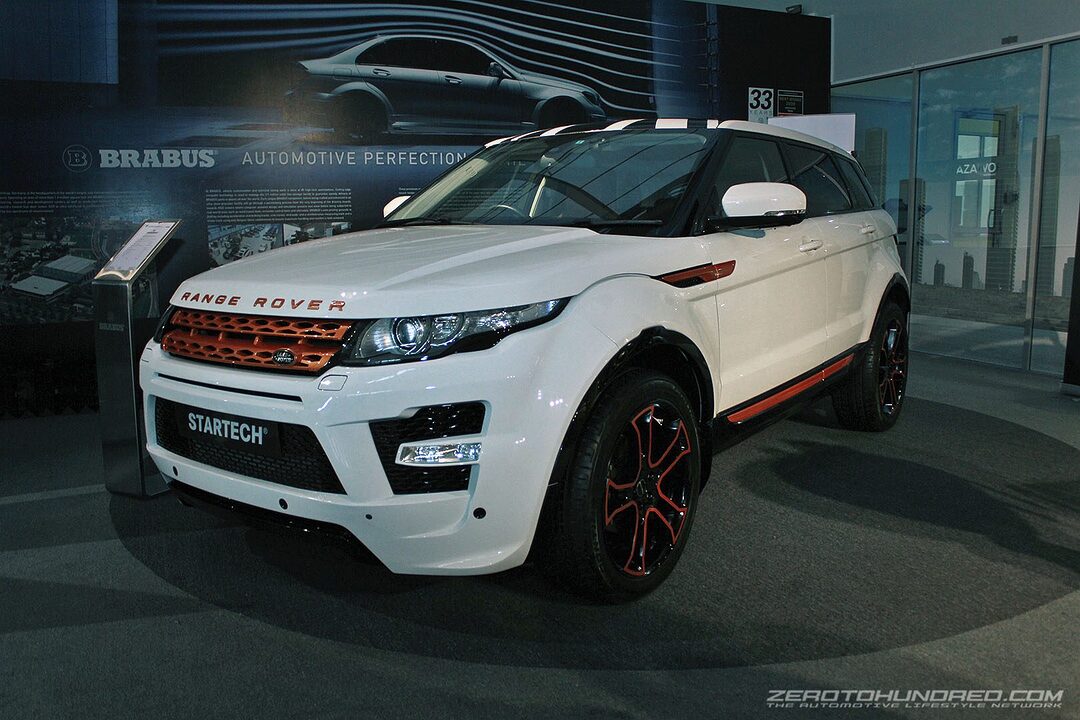
Range Rover Evoque Startech touches down at Naza Merdeka Auto Fair 2016
What’s the deal?
Naza-Brabus, the exclusive sole distributor of...
Anyone have a sump in good condition for sale
Hi Guys
I am looking for an engine sump in good condition if anyone has one??
Let me know I will need it to be shipped to the UK.
Having looked at the sump am I correct in thinking that an EVO sump does not fit...
How to make a turbo sound like a Pigeon ~
I really addicted to those Tu Tu Tu Tu Tu sound emitted by those Supra's,Skyline's,Silvia's and many Turbocharged car's.....although Supra's sound was the sweetest
Heres a video regarding the sound ...
Recent Posts
Looking for 2.5-16 cosworth halfcut for 190E
Started by
Tuanku.J
Euro
Thrills and Spills at Zhuhai: Porsche Carrera Cup Asia Rounds 3 & 4 Recap
Started by
The_Mechanic
News and Features
Proton Records High Demand for S70 with 1 Unit Booked every 4 minutes
Started by
The_Mechanic
News and Features
Toyota Malaysia Enters Regional GT Racing with TGR Racing Malaysia
Started by
The_Mechanic
News and Features
Home Win and Double Podium for Akash Nandy at Sepang Season Opener
Started by
The_Mechanic
News and Features
Search
Online now
david tao
Enjoying Zerotohundred?
Log-in
for an ad-less experience
Home
Forums
Main Forums
Car Talk
Car Modification
Suspension - INFORMATIONAL